
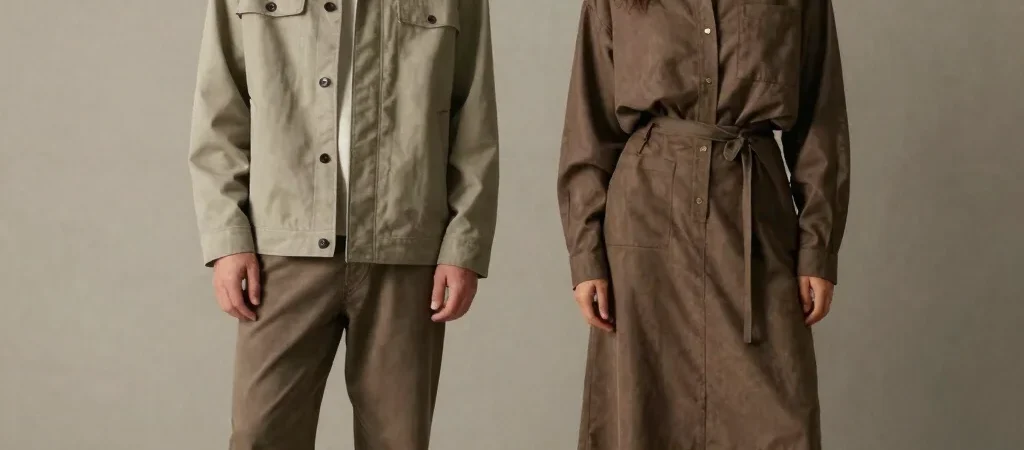
An oversized shirt looks appealing on the hanger, then suddenly seems to swallow the outfit when it is on. The answer is not always to size down. For men’s and women’s style, a roomy piece works best when at least one part of the silhouette feels considered.
Choose One Main Volume
Start by deciding where you want the extra room: shoulders, sleeves, body, or legs. A wide trouser can pair well with a closer-fitting top, while a boxy jacket can sit over a straighter bottom. When every piece is loose, use a visible waistband, a cropped hem, or a cleaner shoe to give the outfit a point of definition.
The goal is not to make the body look smaller. It is to make the proportions legible. A long overshirt over a loose tee may feel shapeless if both hems land at the same point, while a shorter layer creates a break the eye can follow.
Pay Attention to Length
Sleeves and hems are often where oversized clothes stop looking intentional. A sleeve that covers the hand can be folded once, and a trouser hem can sit cleanly on the shoe instead of gathering into a stack. If you like extra length, let one area have it rather than letting every edge trail at once.
For a relaxed outfit, try a roomy button-down half-tucked into straight jeans, or a generous blazer over a simple fitted base. These combinations keep the ease while giving the silhouette a recognizable outline. The same idea works with skirts: a fuller shape often benefits from a top with a clearer waist or shoulder.
Keep the Details Quiet
A voluminous outfit already has movement, so extra details can compete with it. Simple colors, a clean belt, or one piece of jewelry can help the proportions stay in focus. If you want a bolder aesthetic, choose one deliberate contrast—like a structured bag against a soft, oversized coat.
Try the outfit on and check the side view, not just the mirror straight ahead. If the shoulder, waist, or hem gives the eye a clear place to pause, the volume is working. Keep the comfort; just give it a shape.